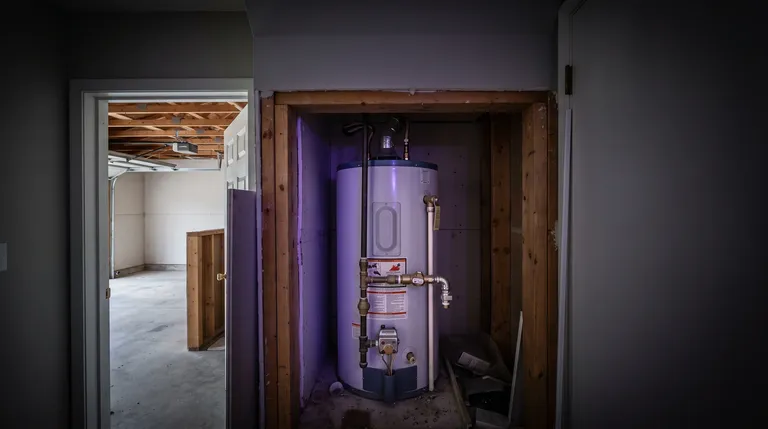

The shower that was fine in August goes cold two minutes early in November, and the tank in your basement has not changed. What changed is the water going into it. Metro Vancouver draws its supply off the Capilano, Seymour and Coquitlam reservoirs, and reservoir water in November is near the bottom of its year. Your heater still holds the same litres. It now has to lift every one of them further before they count as hot.
The water going in got colder
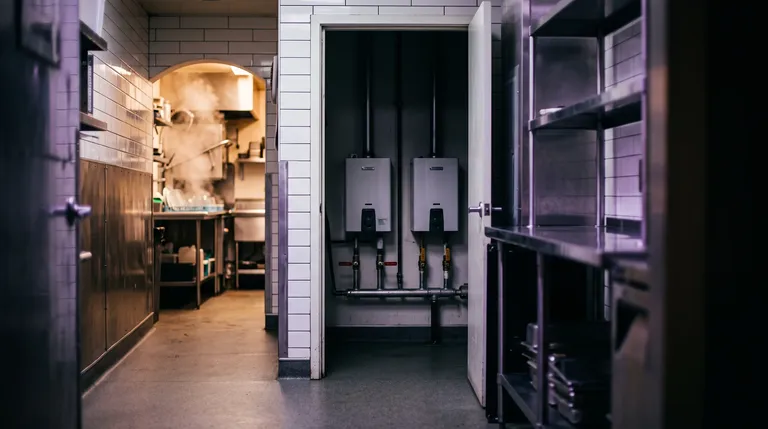
Every rating on a water heater assumes a starting temperature. Push the starting temperature down and two things move at once. At the shower valve you open the hot side further and the cold side less to reach the same temperature, so the tank empties sooner. And the burner or element has further to travel to bring the next tankful back, so the gap between one shower and the next gets longer. A tankless unit shows the same arithmetic with nothing hidden: it is rated for a flow at a stated temperature rise, and when the rise it has to produce grows, the flow it can hold falls. Neither machine is failing. The work got bigger.
Demand moves the wrong way at the same time. Longer showers, more laundry, wet coats, everyone home at the same hour. Natural Resources Canada puts an average Canadian household at about 75 litres of hot water a day and ranks water heating as the second-highest energy use in the home, after space heating. November asks for more of it from a machine that is briefly able to make less.
The thermostat is not a capacity dial
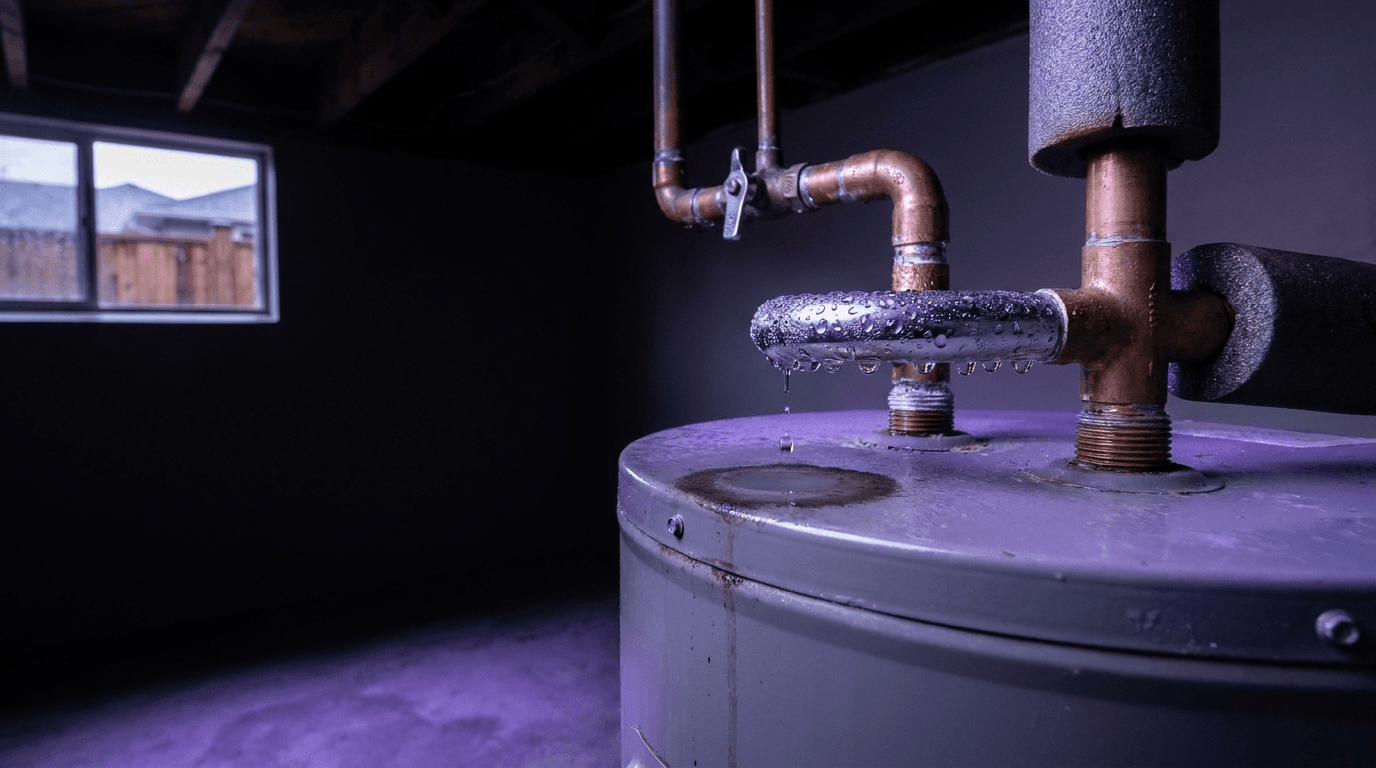
The first instinct is to turn the tank up. There is less room there than people expect, and the reason is safety rather than efficiency. BC Hydro's hot water guidance, published February 1, 2021, sets out the two temperatures a tank works between: water is stored at 60°C in the tank as a precaution against bacterial growth, and the BC Plumbing Code requires that water delivered at the tap not exceed 49°C. Those are not in conflict. They are the two ends of one system, with a mixing valve between them.
What those two numbers mean in a bathroom
BC Hydro states that water at 60°C will severely burn human skin in one to five seconds, while at 49°C a full-thickness scald burn takes ten minutes. A tank turned up in a house with no working mixing valve moves the second number towards the first, and it does it at every tap a child can reach.
This is done by using a mixing valve to temper the delivered-water temperature at taps, bathtubs and shower heads. Such mixing valves can either be located at the faucet or within the water supply system.
Telling the season apart from a fault
A seasonal drop has a shape. It arrives gradually over weeks, it tracks the weather, and the water that does come out is as hot as it ever was. There is simply less of it. A fault has a different shape: a step change inside a few days, or water that never gets properly hot at all, or the same short supply on a mild week in March.
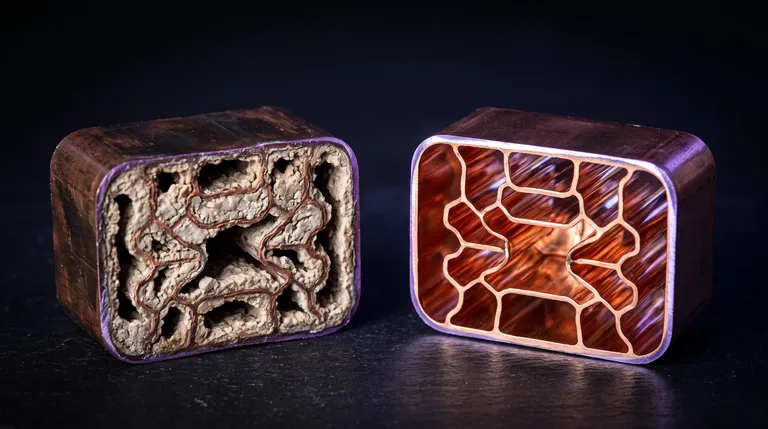
Panther's hot water tank repair page lists what usually sits behind the second shape, and none of it is seasonal: a thermostat setting, sediment build-up in the bottom of the tank, a broken dip tube, a failed heating element, a tripped high-limit switch, or the pilot, thermocouple or gas valve on a gas tank. Sediment is the one worth knowing about, because it does exactly what a cold inlet does. It insulates the heat from the water above it, so the tank never quite feels full, and it usually announces itself with a rumble or a popping sound while it heats. The difference is that sediment does not go away in April.
A heat pump water heater feels November first
If your hot water comes from a heat pump water heater, the season reaches it twice. Natural Resources Canada's guide to residential water heaters, last modified June 10, 2025, says these units take heat out of the air around them, which means less air conditioning in summer and less benefit in winter, when that heat is what the house needs. A unit in a heated utility room is drawing on heat you are paying to make. One in an unheated garage or crawlspace is drawing on November. Either way the recovery you had in August is not the recovery you have now, and the back-up element carries more of the load.
Make the hot water go further this week
- Stagger showers instead of running them back to back.
- Run the dishwasher and the laundry after the last shower.
- Listen for a rumble or a pop while the tank heats.
- Insulate the exposed hot water pipes in the crawlspace or garage.
- Have the temperature measured at the tap, not guessed at the dial.
- Ask whether the mixing valve works before anyone turns the tank up.
- Book a service if the drop happened in days, not weeks.
None of that makes the tank bigger. It buys back the margin the season took, which in most houses is enough to reach spring without a decision. If it is not enough, because the household grew or because the tank is old enough that sediment has had years to settle, then the real conversation is about capacity and condition. That conversation goes better in November than at six on a January morning.