
A water heater replacement is usually urgent, and urgency pushes people toward like-for-like. Same size, same fuel, same spot, done today.
That is often the right answer. It is worth confirming rather than defaulting to, because you will live with the decision for a long time. If you are not yet sure the tank needs replacing at all, repair or replace a hot water tank covers that decision first.
Gas or electric
The most useful thing to know is that this is largely decided for you by what your home already has.
If you have a gas tank, replacing it with a gas tank is straightforward — the gas line, the venting and the connections are already there. Moving to electric means new electrical capacity and dealing with the redundant gas connection.
If you have an electric tank, replacing it with electric is straightforward. Moving to gas means running a gas line to the location and providing venting, which is a substantially larger job.
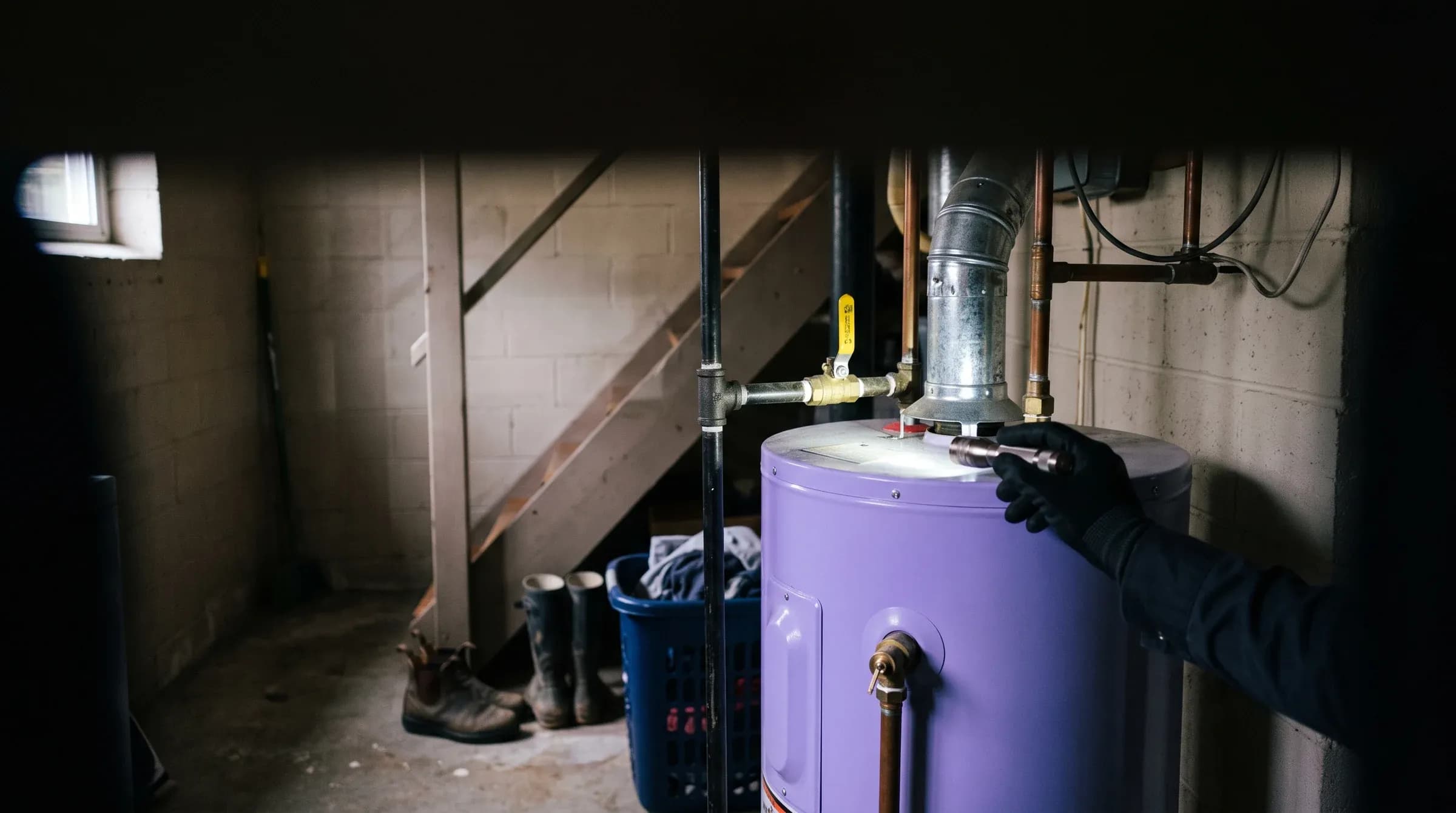
The venting requirement is the part people underestimate. A gas tank burns fuel and must send combustion products outside, which means a vent path from wherever the tank is to the exterior. In a location that has never had one, that is often the largest single element of the work.
Running cost differs between the two, and it moves with energy prices. If it is a genuinely open question for your home, ask for the comparison based on current rates rather than on what was true a few years ago.
Sizing: it is about simultaneous use, not house size
The instinct is to size by the size of the house. What actually matters is how much hot water gets drawn at once, and how quickly the tank recovers afterwards.
A household where two showers run in the same half hour needs more than one where they are spread through the morning, even in the same house with the same number of people.
Recovery rate matters as much as capacity. Gas tanks generally reheat faster than electric ones of the same size, which means a gas tank can serve a given pattern of demand with less stored volume than an electric one.
So the honest sizing question is: what is your worst morning, and how long until the next demand?
Going bigger is not free. A larger tank costs more to buy, takes more space, and holds more water hot around the clock whether or not you use it. Going too small is worse, but oversizing is not costless.
Has the household changed? If your tank was sized for a family that has since shrunk, or grown, or if you have added a suite or a bathroom, the old size may not be the right size.
Location, while you have the chance
A replacement is the only convenient moment to reconsider where the tank lives.
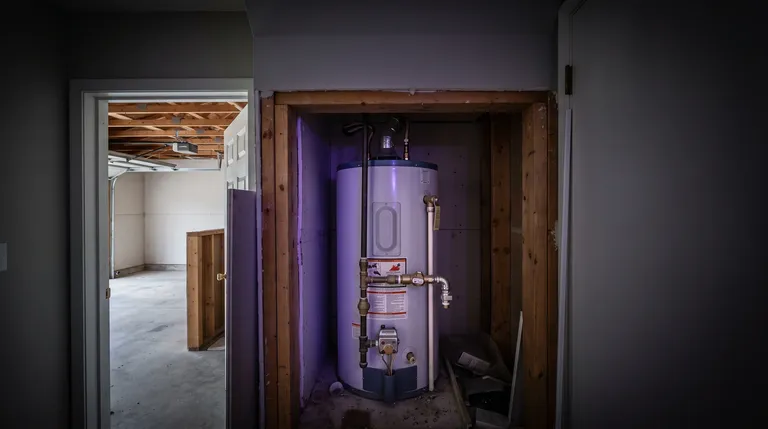
Is it somewhere a failure would do damage? A tank in a finished closet on an upper floor with no drain pan is a risk that is easy to reduce while the tank is out. Adding a pan with a drain, or a leak sensor, is cheap during a replacement and awkward afterwards.
Is it accessible for servicing? A tank crammed into a space where the anode rod cannot be withdrawn is a tank whose anode will never be replaced.
And in a condo, getting a tank in and out is frequently the hardest part of the whole job — hallway closets, service elevators, booking times. That is worth planning rather than discovering.
The alternatives worth thirty seconds
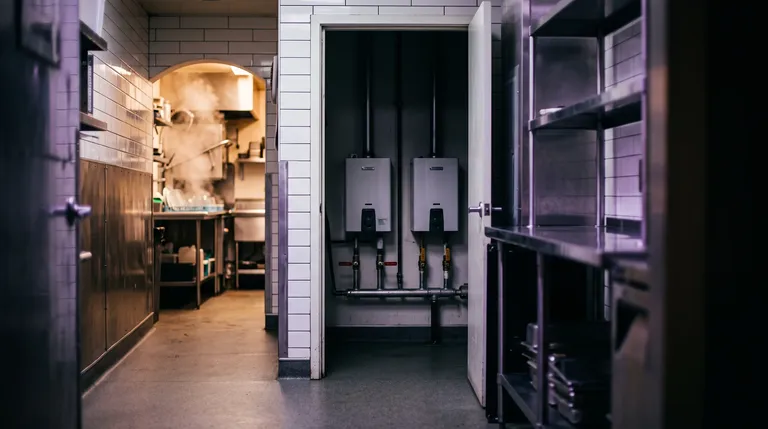
Tankless removes the tank entirely and heats on demand. It suits some homes very well and others poorly, and Tankless water heaters: who they suit and who they do not sets out which.
Heat pump water heaters are the efficient electric option, with real conditions attached. Heat pump water heaters: the efficient option, with conditions sets out those conditions.
Both have rebate programmes that a like-for-like tank replacement generally does not, and both take longer to install. In a genuine emergency, with no hot water in the house, that time pressure usually decides it — which is an argument for thinking about this before the tank fails rather than during.
Temperature
Tank temperature is a balance: hot enough to be useful and to keep the water in the tank healthy, low enough to reduce the risk of scalding — which matters most in households with young children or elderly people.
Your tank's manufacturer specifies where it should be set and there is guidance on this in BC. It is worth having set deliberately rather than left wherever it was, and it is worth asking about during a replacement rather than adjusting yourself.
If yours has failed
Tell us gas or electric, the size if you know it, where it is in the house, and how it fails — leaking, no heat, not enough. That determines what we bring.
Vancouver, Burnaby, Richmond, Coquitlam, Port Coquitlam, New Westminster. 604-865-7979.
Related: Hot water tank replacement · Tankless water heater installation · Heat pump water heaters