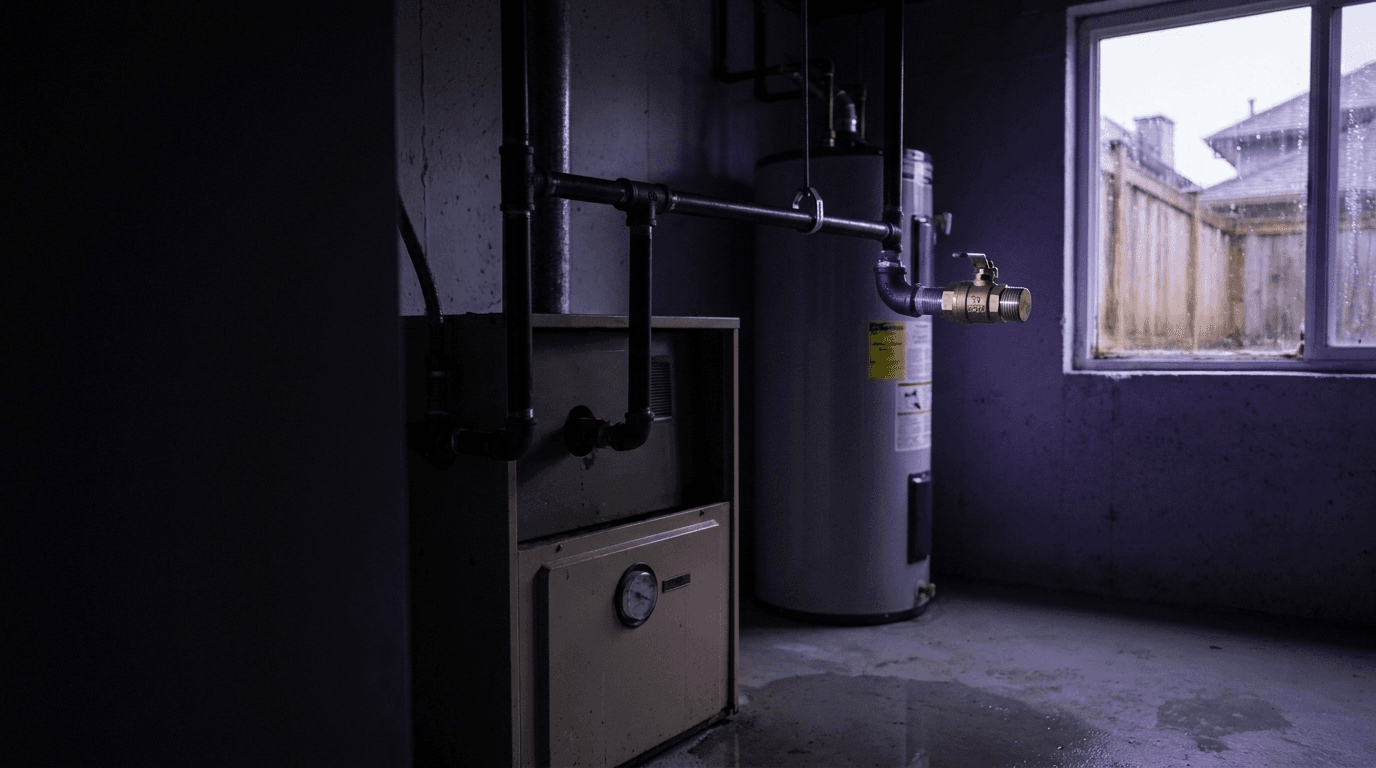

The appliance you picked is rarely what decides a gas job. What decides it is the gas your house already carries. A new range, gas fireplace or tankless heater joins a system already feeding a furnace and a hot water tank, and the pipe under your floor was sized for those, on the day they went in. Work out what is left before you shop. Work it out afterwards and you get an appliance that never reaches the output on its data plate.
The line is sized for the whole house, not the appliance
Two things set the size of a gas pipe: the total connected load of everything on it, and the length of the run from the meter. That is why the same appliance is a one-morning job in one house and a repipe next door. Nothing about the appliance changed. The system it joins did.
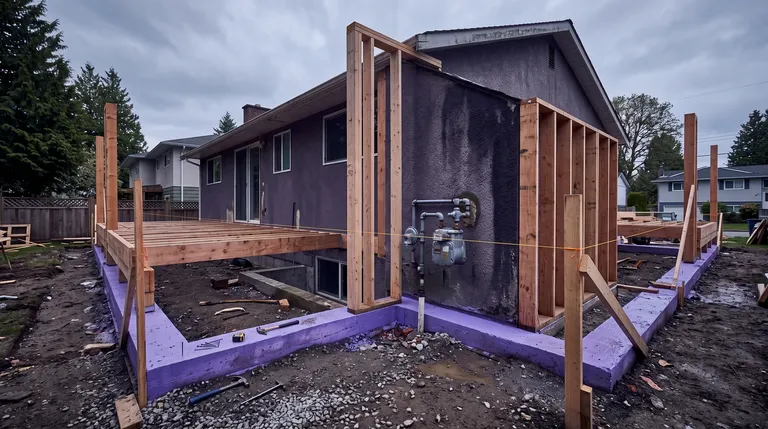
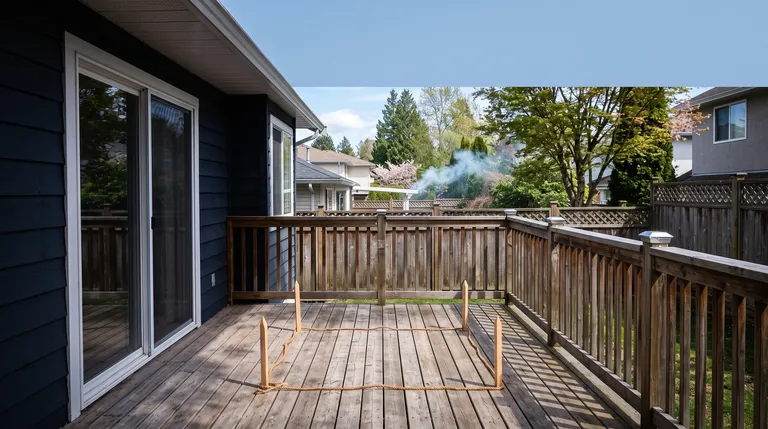
Distance works against you quietly. Gas loses pressure over a run, so a long line behaves like a narrower one. A fireplace at the far end of a Vancouver Special can need a larger diameter than the same one beside the furnace.
Tankless water heaters surprise people most. A tankless unit fires at a much higher input than the tank it replaces, and it does it in bursts. Twenty happy years with a tank does not mean the line is ready for one.
Where the meter, not the pipe, is the limit
Sometimes the pipe inside is fine and the constraint sits outside on the wall. The meter and regulator carry a capacity too, and they belong to FortisBC, not to you and not to your contractor. If the new total goes past what they deliver, one of them is exchanged, and that is arranged with the utility.
This is the part of the job with a calendar you cannot compress. The interior pipe can be ready in a day; a utility exchange runs on the utility's schedule. If the new appliance heats the house, that gap is the reason to start in September rather than in the first cold week.
Ask the capacity question at the first visit
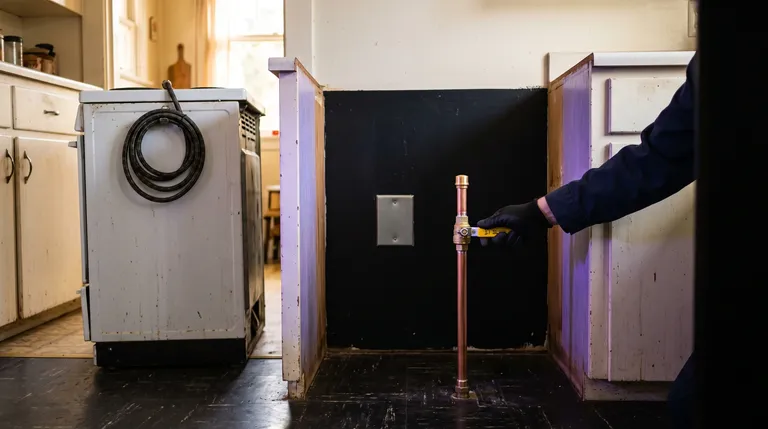
A quote that starts with an appliance model can still end with a meter exchange. Ask what the total connected load will be with the new appliance on, and whether the pipe and meter carry it.
What has to be true before anyone cuts pipe
Gas work in British Columbia is regulated work. Under the Gas Safety Regulation (B.C. Reg. 103/2004, last amended 1 May 2025), the person doing it has to be authorized to do it, and the permit comes before the work rather than after. Technical Safety BC issues those permits across most of the province; a small number of municipalities issue inside their own boundaries.
There is a homeowner route and it is narrow. Section 24 lets you do your own work on your own dwelling only if you pay nobody to help and rent out no part of the house. The moment either stops being true, the job needs a licensed contractor. The work is inspected either way.
The inspection is not a formality. It looks at venting, combustion air, pipe sizing and materials, pressure and leak test results, shutoff valves and clearances. Venting is where an overloaded system stops being a performance complaint and becomes a safety one: incomplete combustion is how fuel-burning appliances produce carbon monoxide, which the Province traces to furnaces, ranges, water heaters and fireplaces.
Signs the house is already at its limit
You can often feel the ceiling before anyone measures it. The fireplace dims when the furnace fires. The tankless heater loses temperature when someone starts the range. A flame that used to sit steady and blue lifts off the ports or goes yellow.
That last one is not a capacity complaint. It is a combustion complaint, and it is the one to stop on. A yellow or lifting flame means the appliance is not burning cleanly. Shut it off and have it looked at before you add anything else to the system.
What to have ready before you book
- List every gas appliance already in the house.
- Read the input rating off each appliance data plate.
- Note where the meter sits and how far the new appliance is from it.
- Say whether any part of the home is rented out.
- Ask for the total connected load after the new appliance, in writing.
- Confirm the permit and the inspection are inside the quote.