
People are often surprised that replacing a shower valve is a significant job while replacing a kitchen tap is a short one. The reason is entirely about where the part lives.
Trim versus valve
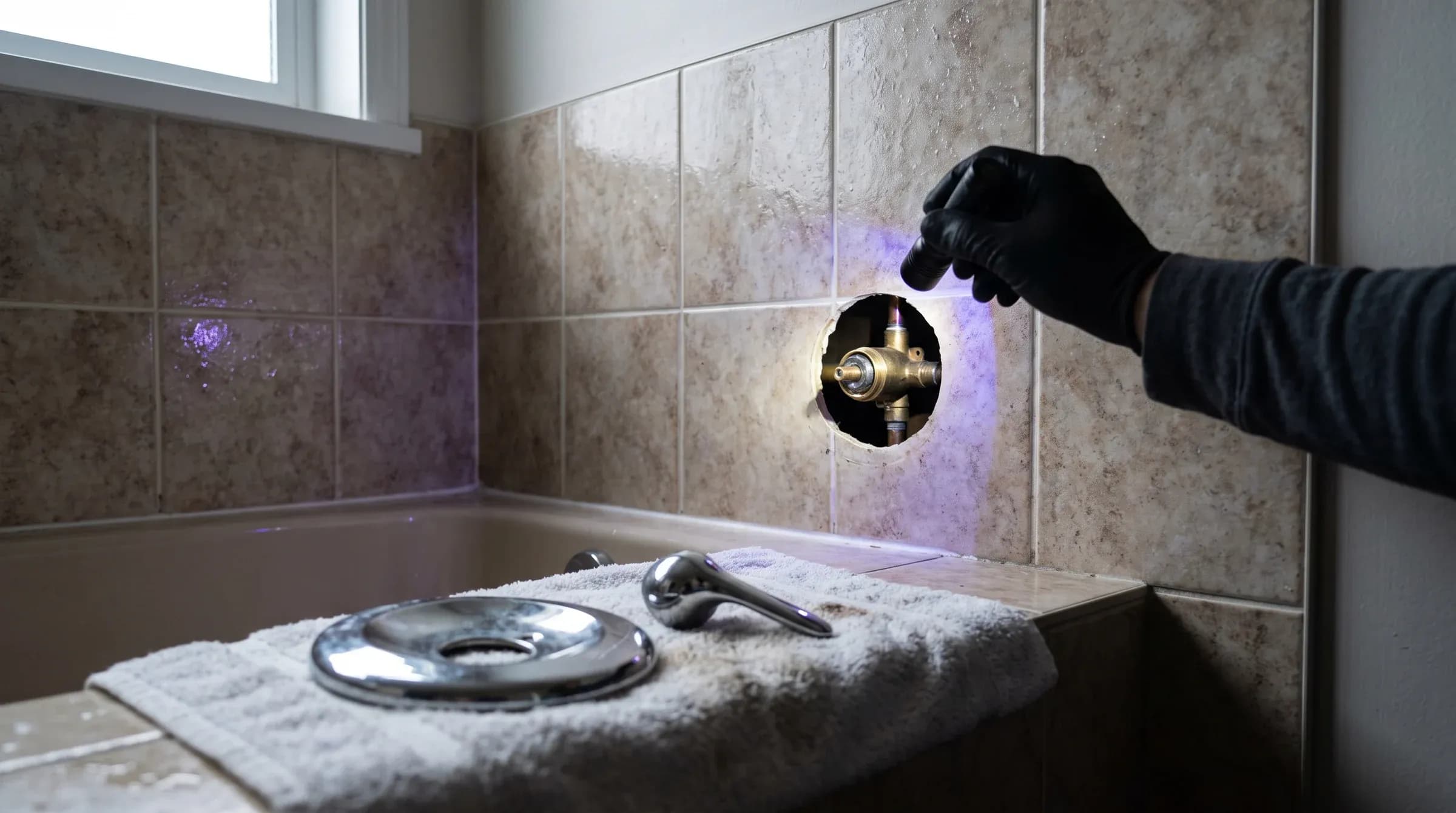
What you see in the shower — the handle, the escutcheon plate, the spout — is trim. It sits on the surface and comes off with a screwdriver.
The valve body is behind the wall. It is the brass component the hot and cold lines connect to, and it is what actually mixes and controls the water. Reaching it means going through the wall.
That distinction is why two similar-sounding jobs have very different shapes.
What can be done without opening anything
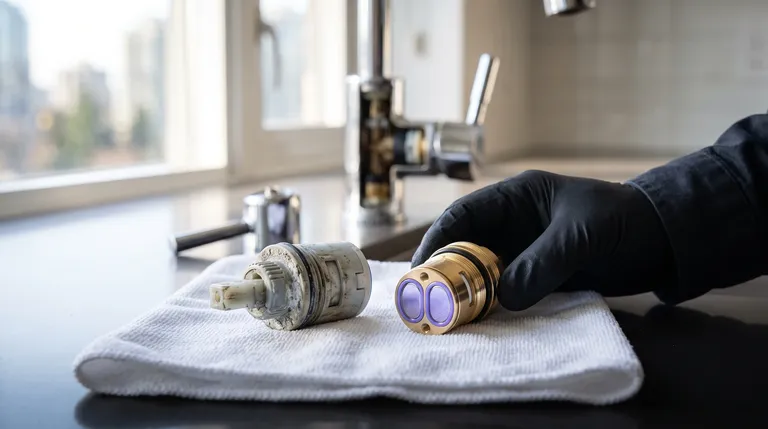
More than people expect. If the valve body is sound and the problem is dripping, stiffness or temperature control, the cartridge inside often replaces from the front. Trim can be changed for cosmetic reasons if the new trim is compatible with the existing valve — same manufacturer, same valve family.
That last condition is the catch. Trim and valves are matched systems, and a new trim kit from a different manufacturer will not fit an existing valve. This is the single most common reason a "just change the handle" job turns into a wall opening.
When the wall has to come open
The valve body is leaking. The valve is old enough that no cartridge is available. You are changing manufacturers. You want a different configuration — adding a handheld, moving to a thermostatic valve, changing the number of outlets. Or there is damage behind the wall that has to be dealt with.
Access from the front or from behind
If there is a closet, a hallway wall, or another room directly behind the shower, opening from that side is usually far better. Drywall is cheap and easy to repair; tile is neither.
The first thing worth working out is what is on the other side of that wall. It frequently changes the job.
Opening tile
If access has to be from the shower side, tile comes out — and tile rarely comes out cleanly.
If you have spare matching tile, this is manageable. If you do not, matching existing tile is often impossible, particularly if it is more than a few years old. Discontinued lines, dye lot variation, and simple age differences mean a patch is usually visible.
That is the moment when a valve replacement becomes a conversation about retiling the wall, or the whole shower. It is worth knowing that possibility exists before the work starts rather than discovering it partway.
Check whether the previous owner left spare tile. People find boxes in garages and crawlspaces more often than you would think, and it changes the outcome completely.
Waterproofing
Behind the tile is a waterproofing layer, and it is the thing standing between your shower and the framing. Opening the wall means breaching it, and closing up means restoring it properly — not just tiling over.
This is the part that gets skipped in cheap work and shows up years later as rot. If the shower is old, opening the wall is also an opportunity to see what state the waterproofing is in, which is information worth having.
While the wall is open
If it is open anyway, this is the cheapest moment to make other changes: adding a handheld, moving to a thermostatic or pressure-balancing valve, relocating the valve height, adding a niche. Doing any of those later means opening the wall again.
What to ask for in a quote
Which access route, what happens if the tile cannot be matched, whether waterproofing restoration is included, and who is responsible for tile work. Those four questions cover the places this job usually goes sideways.
We work on showers and bathtubs across Vancouver, Burnaby, Richmond, Coquitlam, Port Coquitlam and New Westminster. 604-865-7979.
Related: Shower and bathtub plumbing · Bathroom renovation plumbing · Fixture supply and installation