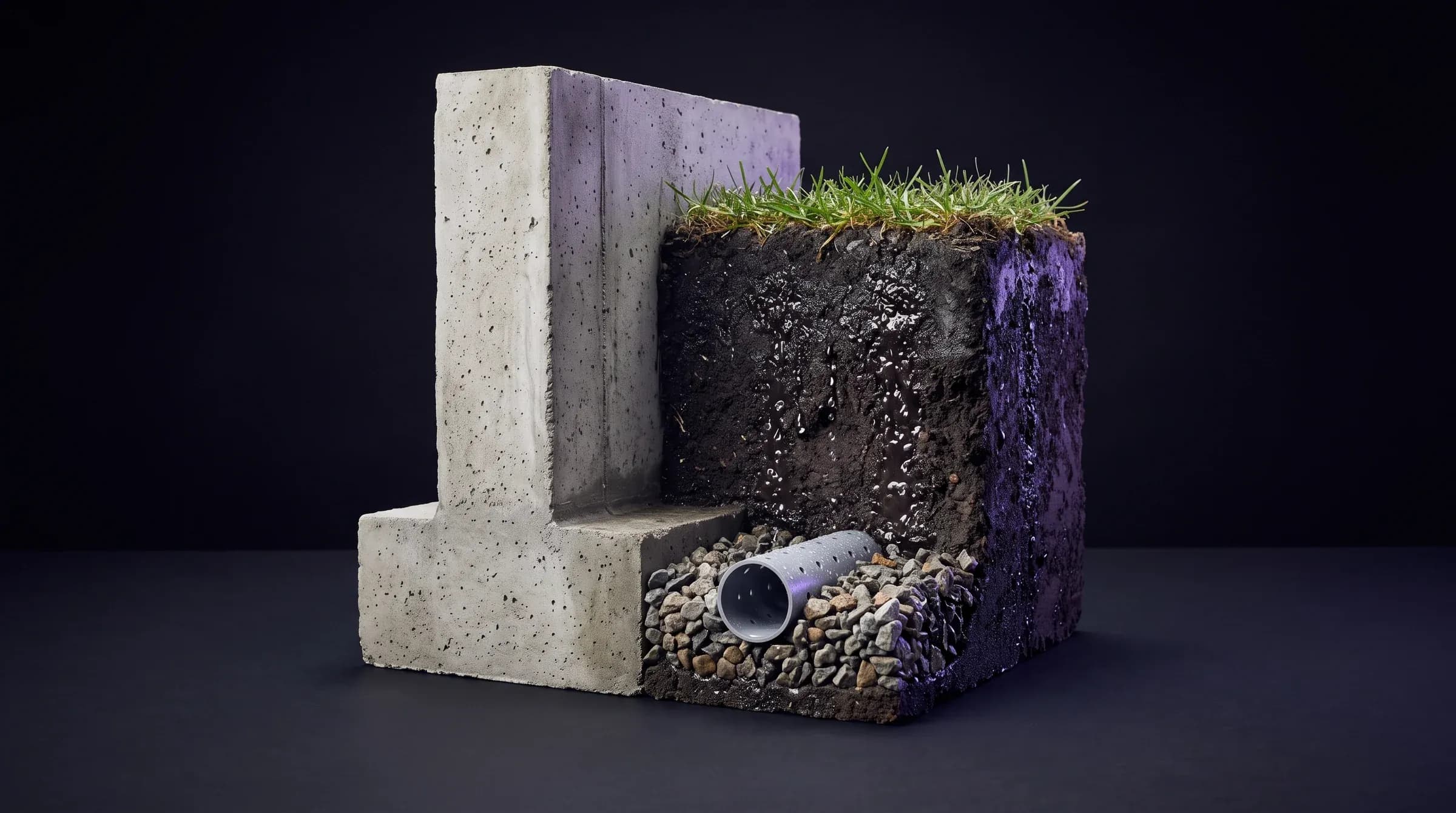

Buried around the footing of your house is a perforated pipe surrounded by gravel. Its job is to collect water in the soil beside your foundation and carry it away before it finds a way in.
In a region with our rainfall, that pipe is doing more work than almost any other part of the building, and nobody thinks about it until the day it stops.
Why it matters more here
Our rain is not dramatic, it is persistent — concentrated into the months when the ground is already saturated and cannot absorb more. Water sits in the soil, and soil holding water against a foundation exerts real pressure on it.
The perimeter drain is what relieves that pressure. When it works, water reaches the pipe and leaves. When it stops, water accumulates against the wall and finds any path it can: a crack, a cold joint, the seam where the wall meets the footing.
How they fail
Silt. The most common cause by a distance. Fine soil particles work their way into the pipe over years and settle, and the line gradually fills from the bottom. This is not a failure of the pipe — it is what happens to a perforated pipe in soil, slowly, always.
Roots. Water and nutrients in a pipe, roots nearby, perforations designed to let water in. Roots enter, grow, and form a mass. Mature trees near a foundation are a large part of why some houses have chronic drainage problems and their neighbours do not.
Crushing or collapse, particularly with older materials that become brittle. Backfill settling, vehicles driving over the line, or landscaping work can crush a section.
Failed connections and joints, where sections have separated or offset.
Blocked or missing outlets. The drain carries water to somewhere — a storm connection, a sump, a discharge point. If that destination is blocked, the whole system backs up regardless of the pipe's condition.
A missing filter layer. Modern practice wraps the gravel in filter fabric to keep silt out. Older installations frequently do not have it, which is why they silt up faster.
The signs
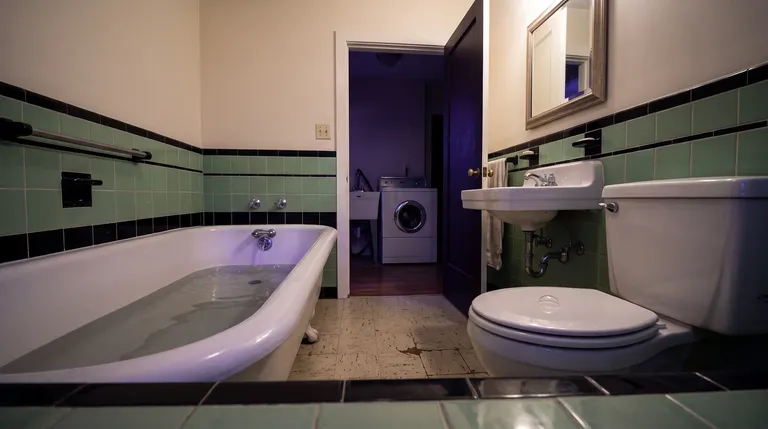
Water in the basement or crawlspace — obviously, but by then it has failed.
Earlier signs are worth knowing. Efflorescence, the white powdery deposit on a basement wall, means water has been moving through the concrete. A damp or musty smell in a basement that is not otherwise wet. Water pooling against the foundation outside, or ground beside the house that stays soft. New cracks in the foundation. A sump pump that runs far more than it used to, or has started running when it never did.
A downspout discharging beside the foundation is worth checking while you are looking. Downspouts should carry roof water away from the house, and one that has come apart or discharges at the wall is putting a great deal of water exactly where you do not want it — and overloading the perimeter drain.
Cleaning or replacing
This is the real question and it deserves an honest answer, which Flush or replace: reading a perimeter drain honestly gives in full.
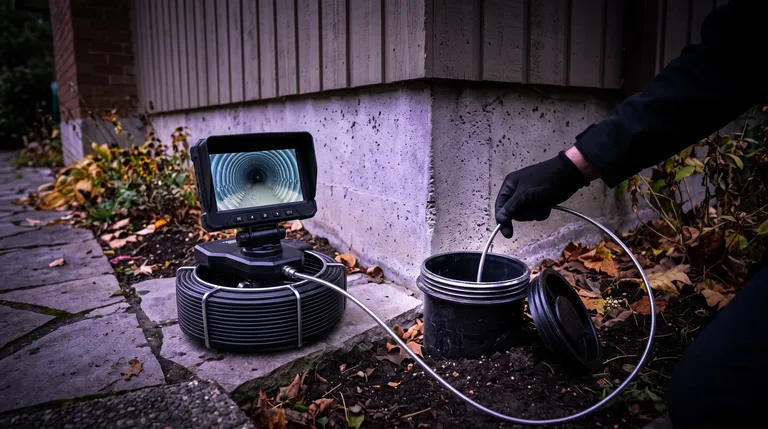
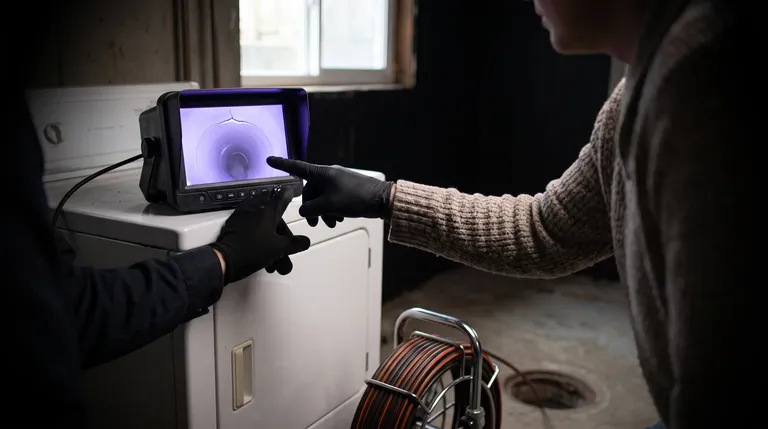
The short version: a system that is silted but structurally sound can often be flushed and restored. A system that is crushed, collapsed, root-destroyed or made of a failed material has to be replaced. Those are very different jobs, and the only way to know which you have is to look inside with a camera.
Anyone who tells you which one you need without looking is guessing.
The seasonal point
Excavation work goes better in drier ground — faster digging, better conditions for backfill and compaction, and less mud through the site. Investigation is better done before the wet season rather than during it, when a failing drain becomes urgent at the same time as everyone else's.
If you have noticed any of the early signs, the useful time to look is a dry stretch, not the first week of heavy rain.
Where responsibility ends
Work on your drainage is yours up to your property line. When excavation reaches the boulevard, the city has to be informed, and we work up to the customer's property. That is worth knowing before planning any work near the street edge.
Vancouver, Burnaby, Richmond, Coquitlam, Port Coquitlam, New Westminster. 604-865-7979.
Related: Perimeter drainage installation and replacement · Perimeter drain cleaning and flushing · Sump pumps