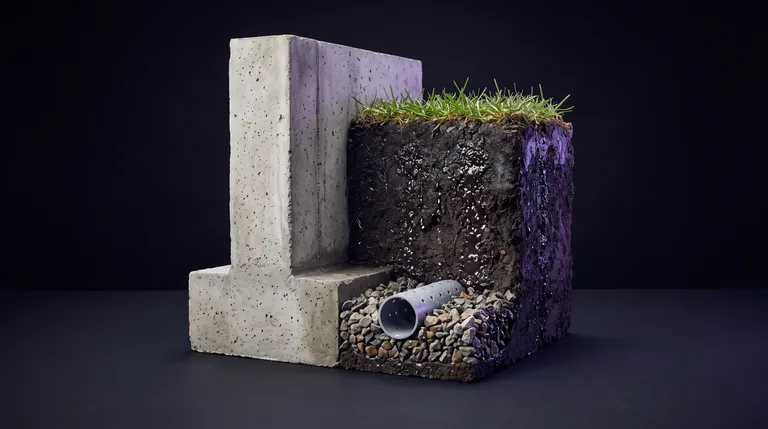

The sewer lateral runs from your house, under your property, to the municipal main. In much of Metro Vancouver's older housing stock it is decades old, made of a material with a known lifespan, and surrounded by mature trees.
It also warns you. The warnings are just easy to attribute to something else.
Multiple fixtures behaving oddly at once
This is the clearest signal there is, and the one people most often misread as a series of unrelated clogs.
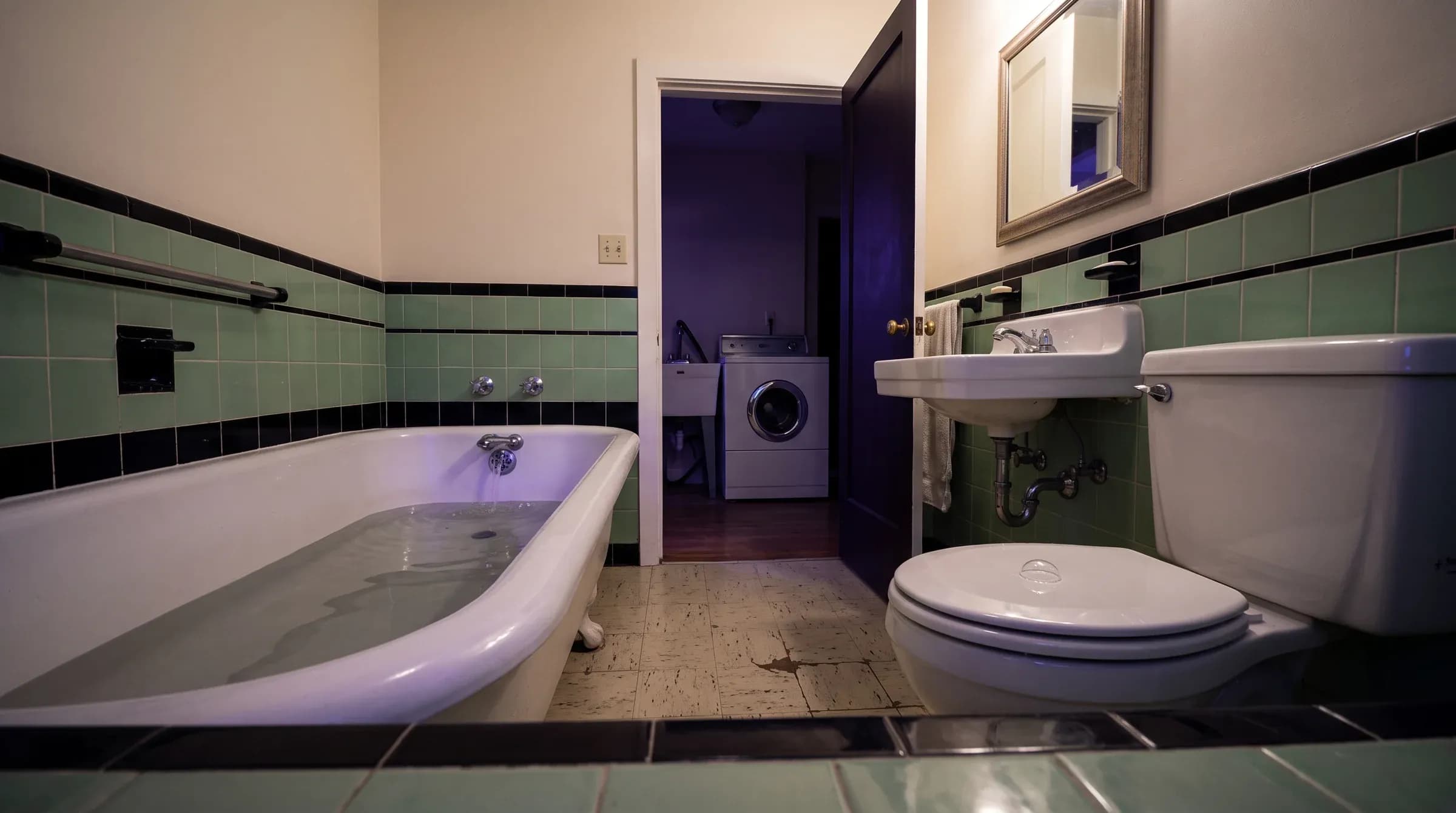
If more than one fixture is slow, or if using one fixture affects another, the problem is in the shared line rather than in any of them. Classic presentations: the toilet bubbles when the washing machine drains, the shower backs up when a toilet is flushed, the basement floor drain overflows when an upstairs bathroom is used.
The lowest fixture in the house shows it first, because that is where a backing-up line reaches first.
Gurgling
Air being displaced where it should not be. A toilet that gurgles, a drain that glugs after it has finished draining — that is water moving past a restriction.
Smell
A sewer smell in the yard, in a basement, or around the house means gas is escaping somewhere it should not. That is a broken line or a failed seal.
The lawn
A section of lawn that is greener, lusher and growing faster than the rest, in a strip. A soggy area that stays soft in dry weather. Both mean something is feeding and watering that soil.
The opposite also happens — a depression or a sinking area where escaping water has washed soil away.
Rodents
Unpleasant but genuinely diagnostic. Rats travel sewer systems, and a break in a lateral is an entrance to your property. A sudden rodent problem with no obvious food source is worth investigating as a drainage question.
Repeated backups
One backup is an event. A second is a pattern, and a pattern in a sewer lateral is usually roots or a structural defect rather than something that was flushed.
Roots, specifically
Roots are the leading cause of lateral failure in this region, and it is not because the trees are aggressive. It is because a sewer line is warm, wet and full of nutrients, and older jointed pipe materials have gaps at every joint.
A root enters as a hair, thickens over years, and eventually fills the pipe. It catches solids, which is why root-affected lines block on ordinary use.
Cutting them out restores flow. It does not fix the entry point, so they return — which means a root problem is either a maintenance schedule or a repair decision, and it is worth deciding which deliberately rather than by repeated emergency.
What the repair options are
Spot repair where a single defect is the whole problem — a break, a crushed section, an offset joint. Excavate that location, replace that section.
Full replacement, where the line has failed generally.
Trenchless methods, which replace or reline the pipe without a continuous trench. The saving is not in the pipe, it is in not rebuilding your driveway, patio or landscaping. It requires the existing line to be usable as a path and adequate access at each end.
What decides between them is what the camera shows, and where the line runs relative to what is on the surface.
Cost is not only about location
It is easy to assume the price of sewer work is entirely about where the line runs and what is on top of it. That matters, but the cause matters too — a root mass, a single crushed section and a fully collapsed line are different jobs even in the same place.
Where your responsibility ends
Generally, the homeowner is responsible up to the property line. When excavation reaches the boulevard, the city has to be informed, and we work up to the customer's property.
The precise division varies by municipality and it is worth confirming with yours before planning work, because it determines who pays for which portion.
If any of this sounds familiar
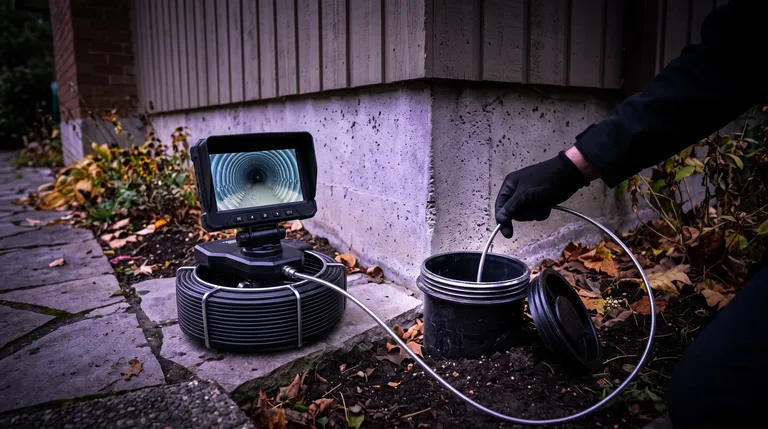
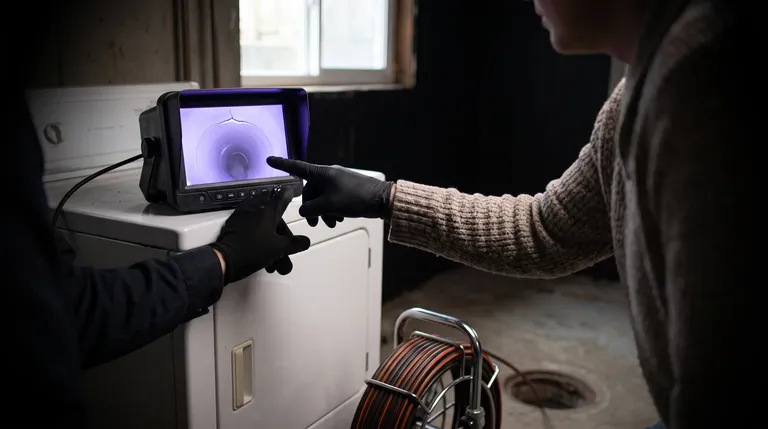
The diagnostic step is a camera, and it is not expensive relative to what it tells you. It converts a worrying set of symptoms into a located, measured problem with a defined repair.
Vancouver, Burnaby, Richmond, Coquitlam, Port Coquitlam, New Westminster. 604-865-7979.
Related: Sewer line repair and replacement · Trenchless sewer repair · Drain camera inspection