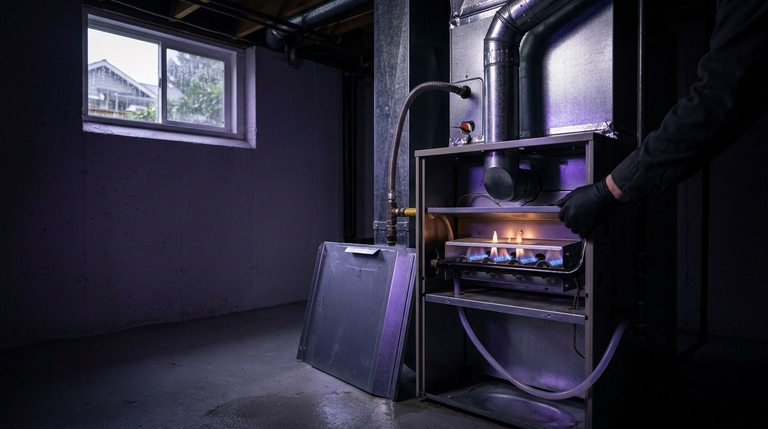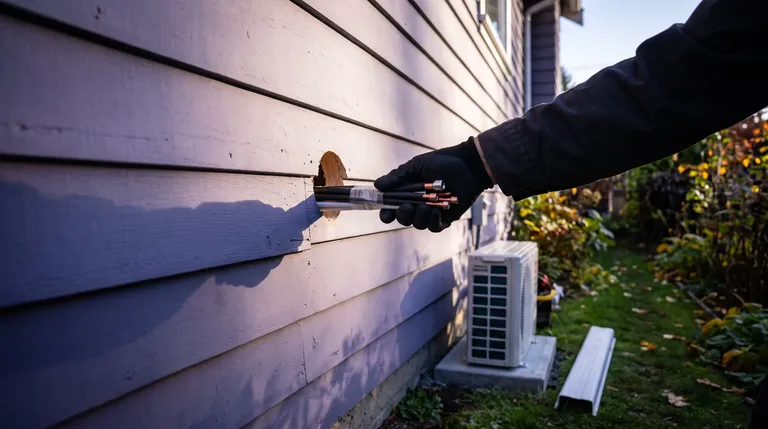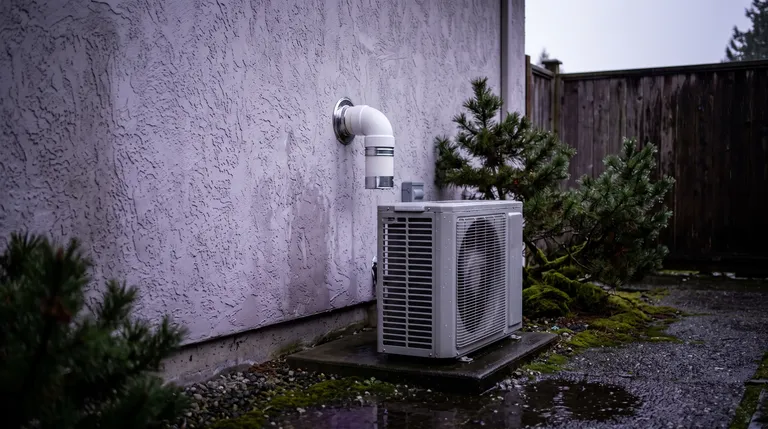


A combination boiler does two jobs from one wall-mounted unit: it heats your home, and it heats domestic hot water on demand. No hot water tank anywhere.
For the right home it is an elegant answer. For the wrong one it is a daily irritation. The difference is mostly about how many hot water outlets get used at the same time.
What it does
When you open a hot tap, the boiler detects the flow, fires, and heats water as it passes through. Hot water is therefore effectively unlimited — you cannot run out, because there is no reservoir to empty.
When the thermostat calls for heat instead, the same boiler heats the water circulating through your radiators or in-floor loops.
Where it shines
Space. No tank. In a condo, a townhouse or a smaller home where a hot water tank occupies a closet you would rather use, reclaiming that space is a real gain.
No standby loss. A tank keeps a volume of water hot around the clock whether or not anyone uses it. A combi heats only what is drawn.
No running out. Long showers, back-to-back showers, filling a deep bath — none of it exhausts a supply, because there is no supply to exhaust.
One appliance, one service visit. Rather than a furnace and a tank on separate schedules.
Where it struggles
Simultaneous demand. This is the constraint that decides it. A combi has a maximum rate at which it can heat water. One shower is comfortable. A shower and the kitchen tap together share that capacity, and both get less. Two showers at once in a busy household is where people become unhappy.
A home with one bathroom, or two bathrooms used at different times, is a good fit. A household of four where mornings overlap is where a tank or a larger system earns its place.
A short wait at the tap. The boiler has to fire and bring water up to temperature. It is brief, but it is not instant, and if the run to the tap is long you are also clearing the cold water sitting in the pipe. A recirculation arrangement can address that, and it is worth discussing during design rather than after.
Gas supply. A combi heating water on demand needs substantial gas flow when it fires. Where the existing gas line was sized for a smaller load, it may need upgrading — and that is one of the more common cost surprises on this kind of conversion.
Water quality and hardness matter more than in a tank system, because water passes through a compact heat exchanger.
The conversion question
Replacing an existing boiler with a combi, and removing the hot water tank, is a substantial change: the tank goes, its connections are removed, the boiler is repositioned or replaced, the gas supply is assessed, and the heating system itself should be flushed so a new appliance is not immediately fed with sludge from old pipework.
That last point is the one most often skipped and it matters more than almost anything else. A new combi on an unflushed old system will block its heat exchanger, and the warranty conversation that follows is not a pleasant one.
How to decide
Count your simultaneous hot water demands honestly — not on an average day, on your worst morning. If two outlets regularly run at once, ask specifically what the flow rate would be under that condition rather than the headline figure.
Then weigh the space you would reclaim, whether your gas supply is adequate, and what condition your existing heating system is in.
If it fits, it is a very good answer. If it does not, no amount of specification fixes the simultaneous-demand problem.
We can look at your system and tell you which category you are in.
Vancouver, Burnaby, Richmond, Coquitlam, Port Coquitlam, New Westminster. 604-865-7979.
Related: Combi boilers · Boilers · Tankless water heater installation