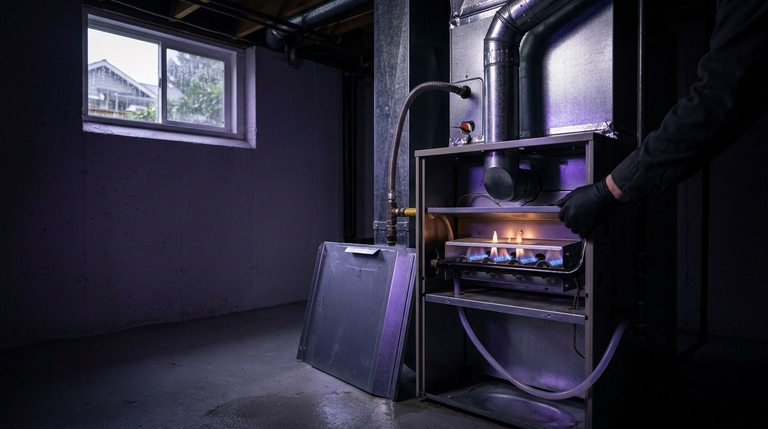

When a furnace stops, the first question is always the same: is this a small fix or is this the end?
Usually it is a small fix. Furnaces fail at their consumable parts long before they fail as machines. But a few faults change the answer entirely, and it is worth knowing the difference before anyone quotes you.
Check these before calling anyone
Genuinely worth two minutes, because a surprising share of no-heat calls are one of these.
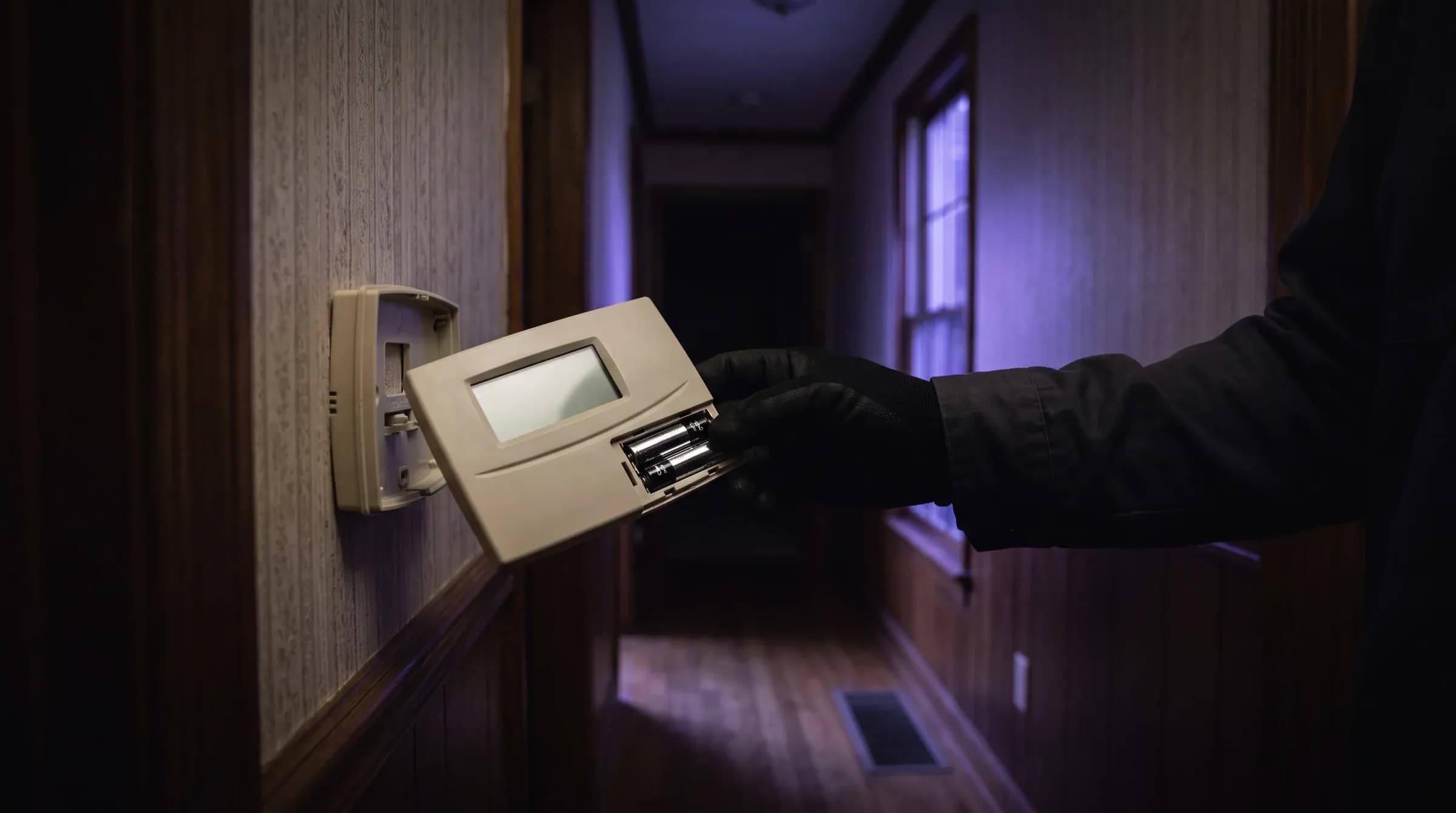
The thermostat. Set to heat, set above the room temperature, and — if it takes batteries — batteries that are not flat. A thermostat with dying batteries produces exactly the symptoms of a dead furnace.
The breaker. Furnaces are on an electrical circuit. If it tripped, the furnace has no power.
The furnace switch. There is usually a switch that looks like a light switch on or near the unit. People turn it off while cleaning and forget.
The filter. A completely blocked filter restricts airflow enough that safety controls shut the furnace down. If yours is grey and you cannot remember replacing it, replace it and try again.
The gas. If nothing gas-fired in the house is working, that is a supply question, not a furnace one.
If none of those is it, it is a service call.
The common, inexpensive faults
Flame sensor. A small rod that confirms the burner actually lit. It accumulates residue, stops sensing properly, and the furnace shuts down as a safety response — usually presenting as a furnace that lights briefly then stops, repeatedly. Cleaning or replacing it is routine.
Ignitor. Modern furnaces light with an electrical ignitor rather than a standing pilot. Ignitors are consumable and fail eventually. A common, straightforward replacement.
Capacitor. A small electrical component that helps motors start. When it weakens the blower struggles or hums without starting.
Limit switch or pressure switch. Safety devices that stop the furnace when something is wrong. Sometimes the switch itself has failed; sometimes it is doing its job and reporting a real problem, such as a blocked vent. A good technician establishes which.
Blower motor. More significant, but still a repair on an otherwise sound furnace.
Control board. Meaningful in cost. On a unit with plenty of life left it is worth doing; on an old unit it is often the point where the arithmetic changes.
The faults that end it
A cracked heat exchanger. The heat exchanger separates combustion gases from the air circulating through your home. When it cracks, that separation is compromised, and combustion products can enter the air you breathe — carbon monoxide among them.
This is not a repair-versus-replace judgement in the normal sense. A furnace with a confirmed cracked heat exchanger should not be run. Replacement of the exchanger is sometimes technically possible but the cost usually approaches a new furnace, so on an older unit it is effectively the end.
If you are told this, ask to be shown what was found and how. It is a serious diagnosis and it deserves clear evidence.
Repeated significant failures on an old unit. No single fault, but a third or fourth substantial repair on a furnace already near the end of its service life. At that point each repair is buying an uncertain amount of time.
A unit whose parts are no longer available. If the part cannot be obtained, the decision is made for you.
The rule of thumb, and its limits
The usual guidance is that when a repair costs a large fraction of replacement, you replace. That is broadly sound but it ignores two things worth weighing.
Age matters independently. A significant repair on a nearly-new furnace is worth doing; the same repair on a unit near the end of its life buys an unknown amount of time.
And a replacement is not just a new furnace — it is a chance to size the system correctly, to fix ducting nobody has ever looked at, and to consider whether a heat pump belongs in the picture. That value does not show up in a simple repair-versus-replace comparison.
Carbon monoxide, briefly
Every home with gas appliances should have working carbon monoxide alarms, tested regularly, wherever the manufacturer specifies. If an alarm sounds, leave and call from outside.
This is not furnace-specific advice. It is the single most important thing in this article.
If your furnace is down
Call and describe what it is doing — does it try to start, does it light and stop, does the blower run, are there error lights flashing a pattern. That description shortens the visit and sometimes answers it on the phone.
604-865-7979, across Metro Vancouver.
Related: Furnace repair · Furnace maintenance and tune-ups · When to replace a furnace