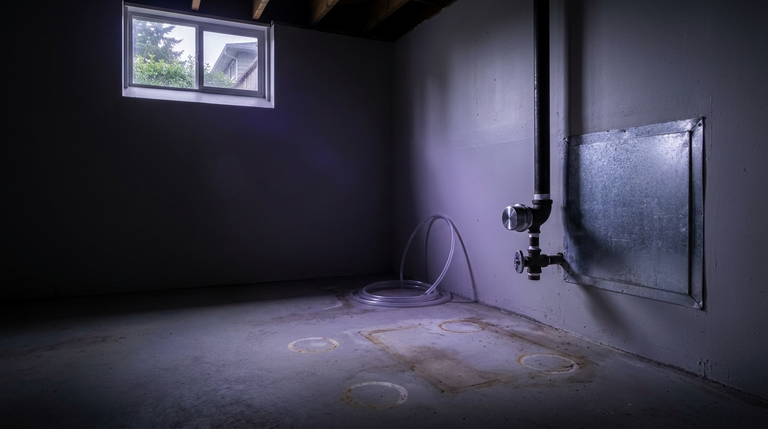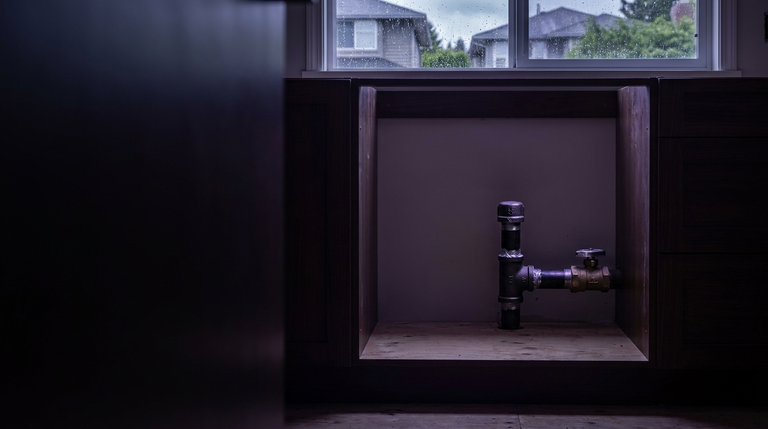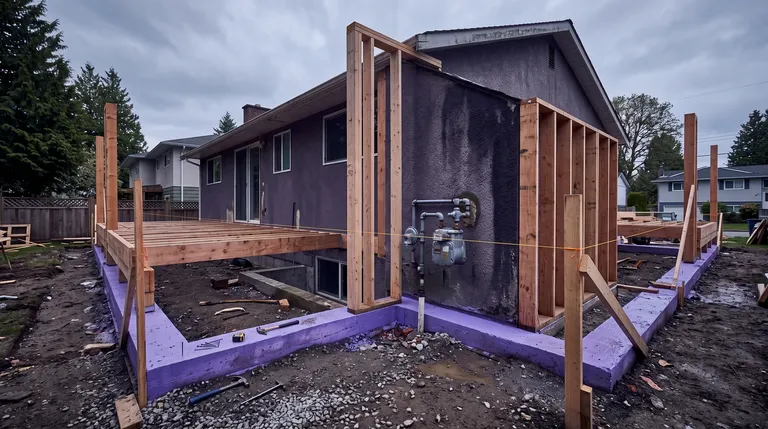

A windstorm takes the power out on a November evening and the house begins to cool. The gas is still there — the gas line does not care about the weather — but the furnace is silent, the tankless will not make hot water, and the fireplace may or may not light. What decides it is not the fuel. It is whether the appliance needs household electricity to open and hold its gas valve.
This is an ordinary Metro Vancouver event, not a rare one. One windstorm on December 17, 2025 took power from more than 100,000 BC Hydro customers on British Columbia's South Coast. The time to learn the answer for your own house is a lit afternoon, not nine o'clock on the night it happens.
Why the furnace stops
A forced-air furnace burns gas, but nearly everything around the burners runs on the house's own 120-volt supply: the control board that sequences the start, the igniter, the inducer motor that proves the vent is clear before gas flows, and the blower that moves heat into the ducts. With no power the board never calls for gas at all, and there is nothing to light by hand. A boiler, a heat pump and a tankless water heater stop for the same reason.
A standing pilot makes its own electricity
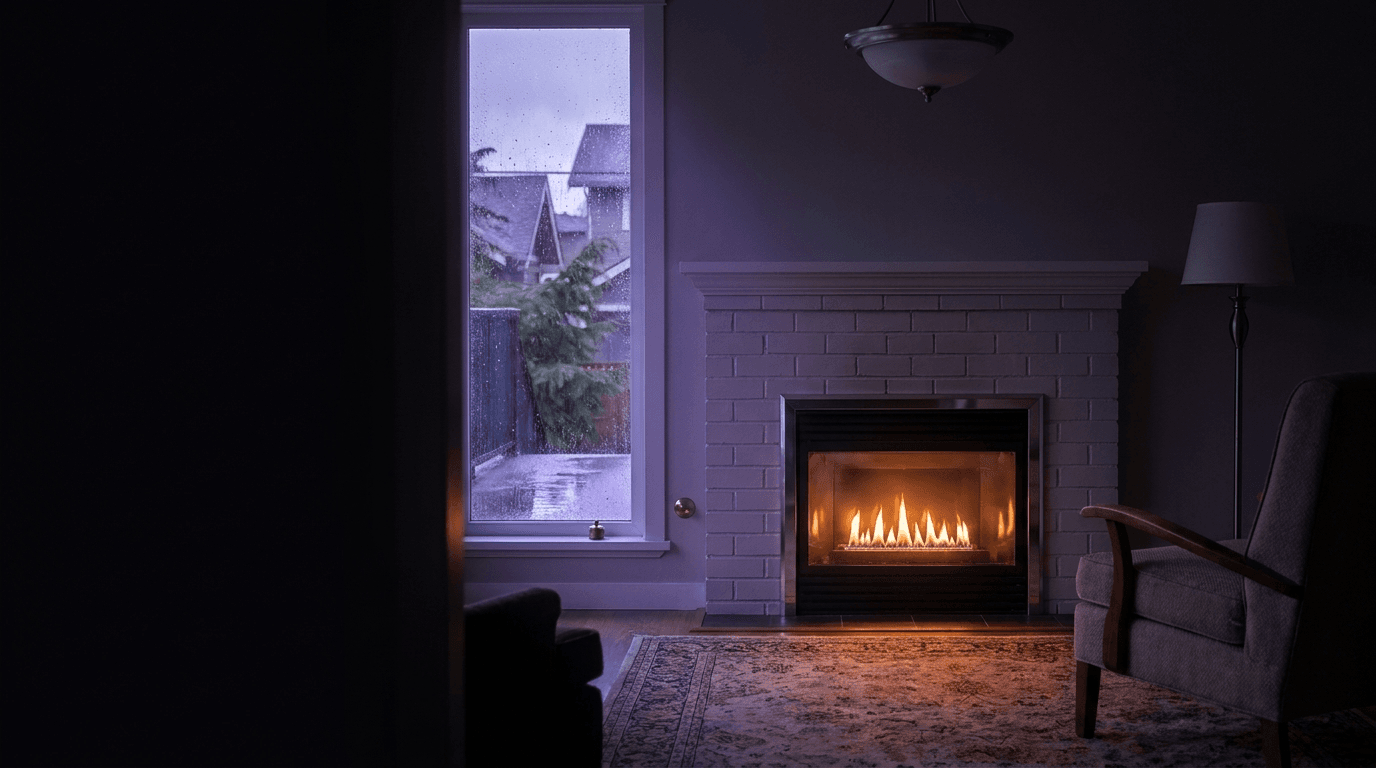
An older gas fireplace has a standing pilot: a small flame that burns all year behind the glass. That flame is doing more than waiting. It heats a thermopile, a stack of thermocouples, and the heat alone generates the few hundred millivolts that hold the main gas valve open. The wall switch in that circuit carries no household current; it completes a loop the pilot flame is powering. That is the whole reason a fireplace like this lights in a blackout while the furnace three metres below it does not. The same trick keeps a conventional gas tank making hot water all outage.
A newer fireplace needs a battery, and it is not in it
Fireplaces built in recent years mostly use electronic ignition: no standing pilot through the summer, and a spark that lights the pilot each time you ask for heat. That spark needs electricity. Most have a battery holder behind the lower louvre for exactly this situation, taking two D-cells or four AA depending on the model. The batteries are not meant to live there — left in, they drain and the firebox heat ruins them — so on the evening it matters the holder is usually empty. Open the louvre this week and write down which size it takes. That is the entire job.
What the battery does not do
Battery backup lights the fireplace. It does not run the blower, the remote, the wall thermostat or the accent lights. Expect a flame and radiant heat in one room, not a heated house.
What not to bring indoors
The dangerous hour of an outage is the one where a cold, dark house starts to look like a problem to be solved. Technical Safety BC's guidance for householders during a power outage, published January 16, 2020, is blunt: a generator belongs outside, away from windows and vents; a barbecue stays clear of doors and windows; a propane stove or lantern is never used in an enclosed space or as heat. A gas oven is not a heater either. Each of those fills a house with combustion products at the moment its ventilation is also off.
never use in enclosed spaces such as a garage, or near windows or any ventilation system as they pose the risk of carbon monoxide
Carbon monoxide alarms are the other casualty. A hardwired alarm with a dead backup cell, or none, protects nobody once the power is off — and an outage is exactly when the improvising starts. Test every alarm in the house, and confirm each still sounds on its battery alone.
Before the first storm
- Look behind the glass and find out whether your fireplace has a standing pilot.
- Open the lower louvre and note the battery size the holder takes.
- Buy those batteries and keep them out of the firebox until you need them.
- Test every carbon monoxide alarm on battery alone.
- Leave the furnace at its normal setting; it has no manual mode to find.
- Keep generators, barbecues and propane heaters outside, away from windows and vents.
- Relight a pilot that blew out by the instructions on the plate inside the lower cabinet.
- Leave the house and call from outside if you smell gas at any point.