
The water service line runs from the municipal main, under your property, into your home. It is buried, it is old in a lot of Metro Vancouver housing, and it is invisible until it is a problem.
It also usually announces itself first, if you know the signals.
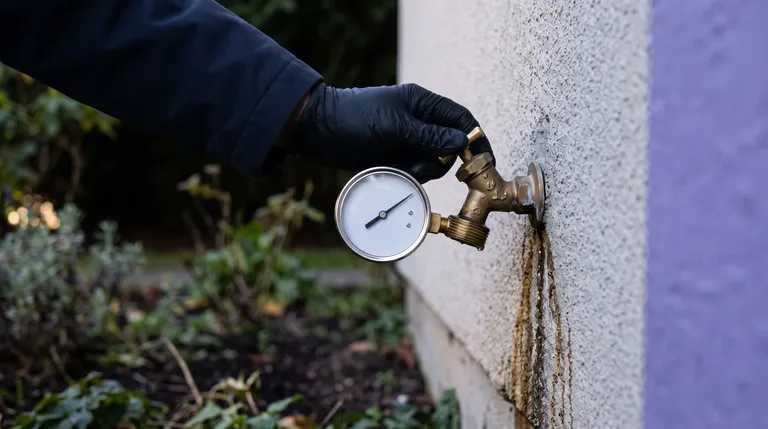
Pressure that dropped across the whole house
Not one fixture — every fixture. If the shower, the kitchen tap and the outside hose have all weakened together, the constriction is upstream of all of them.
Old service lines narrow from the inside as they corrode and scale, and a line that has lost most of its effective diameter delivers noticeably less water. The change is slow, which is why people adapt to it instead of noticing it.
A wet or unusually green patch in the yard
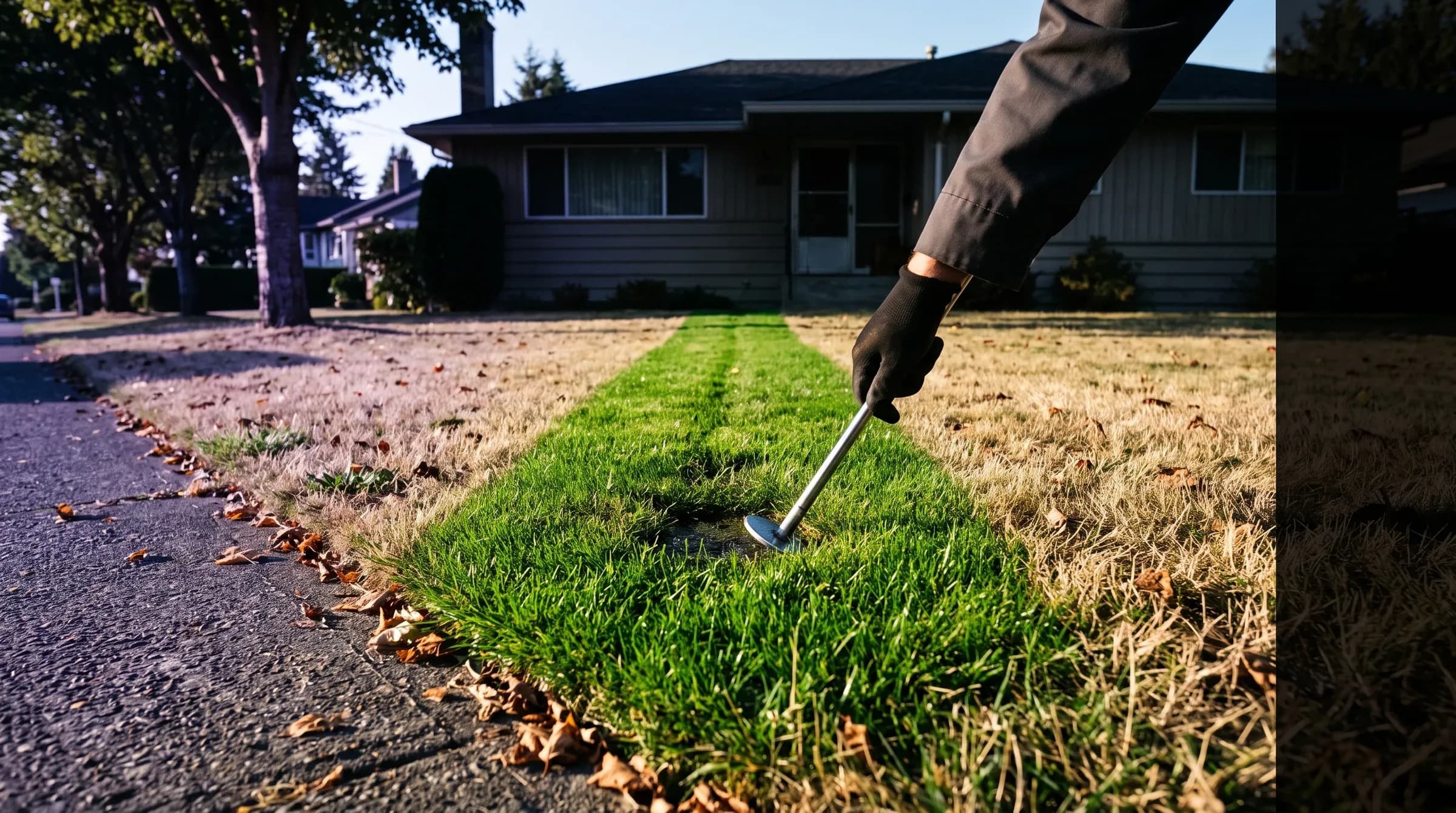
A leaking underground line puts water into the soil. On a lawn this shows as an area that is soggy in dry weather, or greener and growing faster than the grass around it — a fertilised-looking stripe with no explanation.
On a driveway or path it may show as water seeping at an edge, or as a section that is dark and never quite dries.
In our climate this one is harder to read for much of the year, because everything is wet. It is most visible in a dry spell.
A water bill that stepped up and stayed up
Same test as any hidden leak: turn everything off inside and watch the meter. If it moves, water is escaping, and if nothing inside is running then the escape is between the meter and your fixtures — which includes the service line.
Discoloured water, especially rusty
If the service line is galvanised steel, corrosion products come off it. Water that runs rusty first thing in the morning, then clears, is a common presentation.
Sinkholes, settling, or a section of path that has dropped
Water escaping underground moves soil. A depression that has appeared in a lawn or a section of paving that has settled is worth investigating, because the water has been going somewhere for a while to shift that much material.
What you own and what the city owns
This is the question everyone asks and the answer is worth getting right for your specific municipality, because it differs.
The general shape in the region is that the homeowner is responsible for the portion on their property, and the municipality for the portion in the road allowance — but exactly where that line falls, and who is responsible for the connection itself, varies by city and is a question for the municipality rather than for us. When work reaches the boulevard or the road, the city is involved.
Ask your municipality directly. It is a single phone call and the answer determines who pays for what.
Replacement, briefly
Two broad approaches. Open trench means excavating along the line, which is straightforward and inexpensive under a lawn and considerably less so under a driveway, mature landscaping or a sidewalk. Trenchless methods pull or burst a new line through the old path with far less surface disruption, which is why they exist — the saving is not in the pipe, it is in not rebuilding your driveway.
What decides it is length, depth, what is on the surface, soil conditions, and whether the existing line can be used as a path.
If you have noticed one of these
The pressure signal and the meter test are the two most people can check themselves in a few minutes. If either points the wrong way, it is worth a look before the line decides the timing for you.
Vancouver, Burnaby, Richmond, Coquitlam, Port Coquitlam, New Westminster. 604-865-7979.
Related: Water line and main replacement · Trenchless or open trench · Water pressure problems