
People ask about cost first and disruption second, but disruption is often what actually decides when the work happens. It is worth knowing the shape of it.
Before anything is opened
A proper repipe starts with planning the routes. Where do the new lines run, which walls have to be opened, where can existing access be used instead of making new access. This is the part that determines how much drywall comes out, and it is worth doing carefully rather than quickly.
You will also make decisions in advance: whether to relocate anything while the walls are open, whether to add shutoffs where there are none, whether to deal with an old water heater at the same time since the connections are being remade anyway. Doing those together is much cheaper than doing them later.
The openings
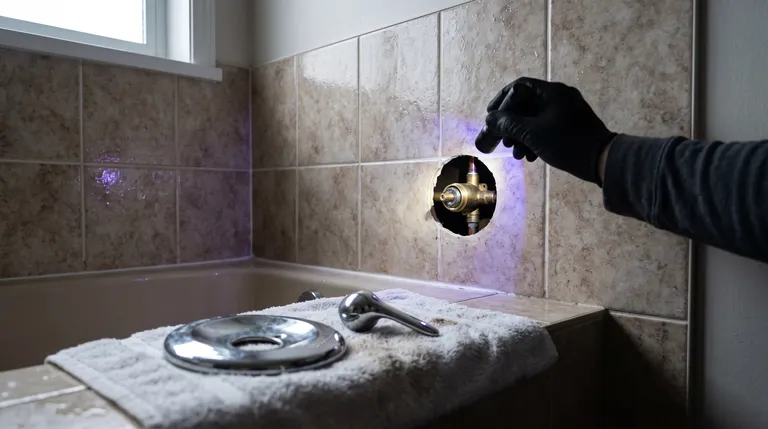
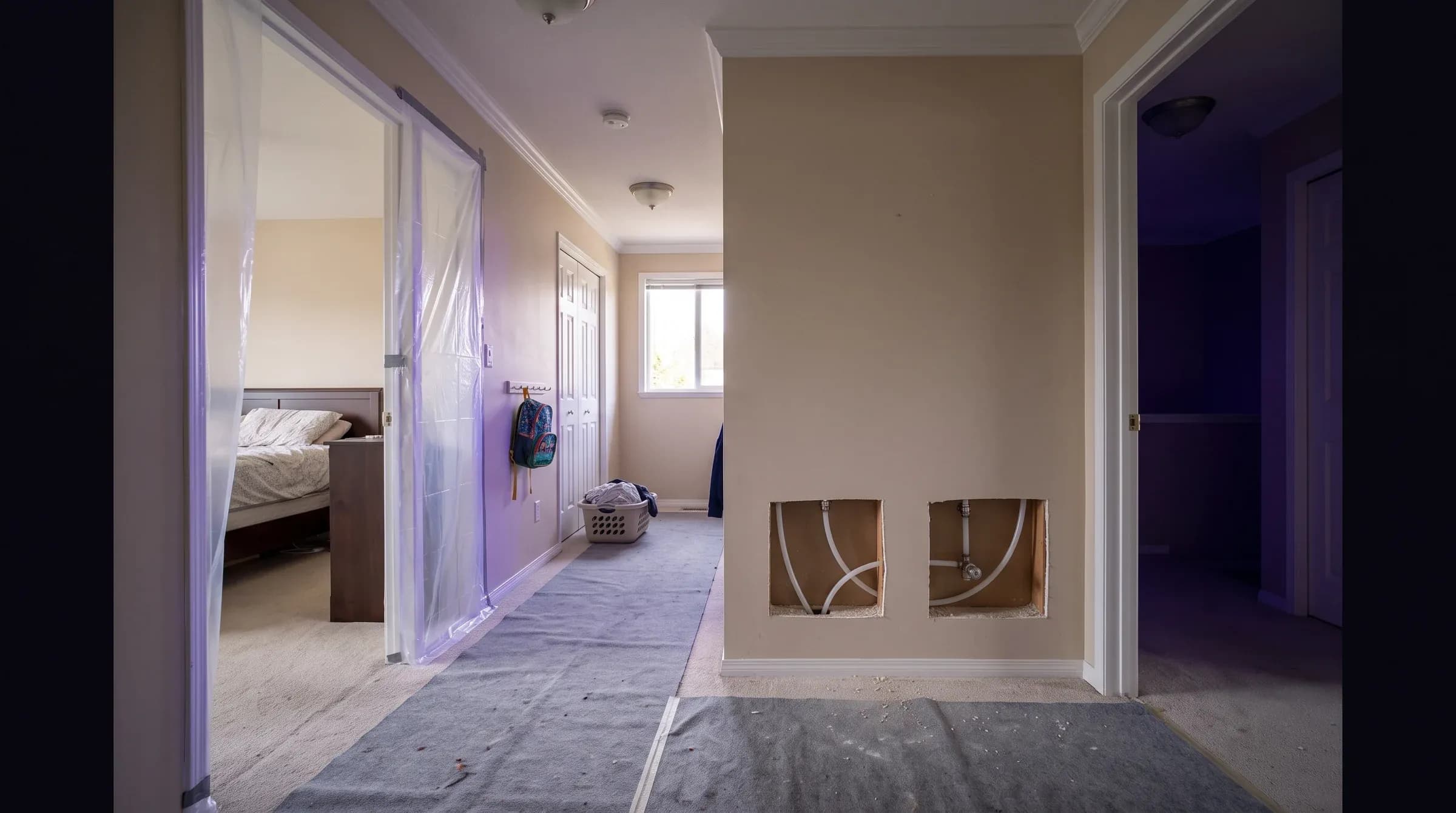
Access holes go in along the pipe routes — typically high on walls, in ceilings below upstairs bathrooms, and in the spaces around fixtures. They are cut deliberately, sized to the work, and placed to minimise the repair where that is possible.
This is the stage that looks alarming. A house with a dozen open access holes looks like a demolition. It is not; it is the working phase, and it is temporary.
The water goes off, and comes back
Water is off during the working day while lines are being cut over. On most jobs it is restored at the end of each day, so you have water overnight. On some — particularly the day the main connections are remade — it may be off longer.
You should be told in advance which days those are. If you have a household that cannot be without water at particular times, say so early, because the sequence can usually be planned around it.
Can you stay?
For most detached homes and townhouses, yes. It is dusty, it is noisy during working hours, there are people moving through the house, and one or more bathrooms may be out of use at a time. But you sleep in your bed and you have water at night.
For a condo suite the job is usually shorter and the answer is more often yes for the same reasons.
Where people choose to leave, it is usually because of small children, someone working from home who needs quiet, or a household where the dust is a health issue.
Dust
Cutting drywall makes fine dust that travels. Good practice is plastic sheeting to isolate work areas, covering what cannot be moved, and cleaning at the end of each day. It still gets everywhere to some degree — expect to clean thoroughly afterwards regardless.
If someone in the house has a respiratory condition, say so before the work starts.
Pets
Doors are open, people are in and out, and there are tools and offcuts on floors. Plan for pets to be somewhere else during working hours, or contained in a room that is not part of the work.
Sequencing, and where the delays come from
The plumbing itself is predictable. What extends a repipe is almost always something found once the walls are open — old work that was never right, a run that cannot go where it was supposed to, damage that was hidden.
That is not a reason to distrust a schedule; it is a reason to ask what happens if something is found, and to have that answer before it is.
Afterwards
Pressure testing and inspection first. Then the openings get closed — drywall, taping, sanding, paint. Sanding is its own dusty stage, and it is usually the longest single part of putting a house back.
Be clear in advance about whether closing up is in your scope or someone else's, and whether "repaired" means patched, or patched and painted to match.
The part nobody mentions
The water is different afterwards. New lines have no accumulated scale, so pressure at fixtures is often noticeably better, and the discolouration people had stopped noticing is gone.
It is the one part of the job that feels like an upgrade rather than a repair.
We repipe across Vancouver, Burnaby, Richmond, Coquitlam, Port Coquitlam and New Westminster. 604-865-7979.
Related: Whole-home and suite repiping · How to tell if your home needs repiping · Condo and high-rise plumbing