
Your house has three kinds of drain pipe and only one of them is meant for waste. The rain that lands on your roof, and the water the perimeter drain collects from around your footings, belong in the storm system. The sanitary line belongs to the toilets and the sinks. When roof or foundation water has been plumbed into the sanitary line instead, nothing looks wrong for most of the year. It looks wrong on a weekend like the one coming, when 50 to 80 millimetres is forecast to fall on Vancouver between Friday and Sunday.
Three pipes, three jobs
Metro Vancouver describes sanitary sewers as the pipes that collect the wastewater put down a toilet or a drain and carry it to a treatment plant. Storm pipes carry rain off roofs, driveways and yards. In older neighbourhoods there is a third kind, a combined sewer that carries both in one pipe, and the region is plain about how those behave: they are designed to discharge into the environment during heavy rain, to avoid backups into homes and businesses. That design choice tells you what the alternative is when a sewer runs out of room in a storm, and where it goes instead.
About half of the region's sewer system is not the region's at all. It is pipe on private property, which is why Metro Vancouver's advice on the subject is addressed to the people who own it rather than to engineers. The line between your house and the city main is yours, and so is whatever else has been connected to it over the past century.
The connection that should not be there
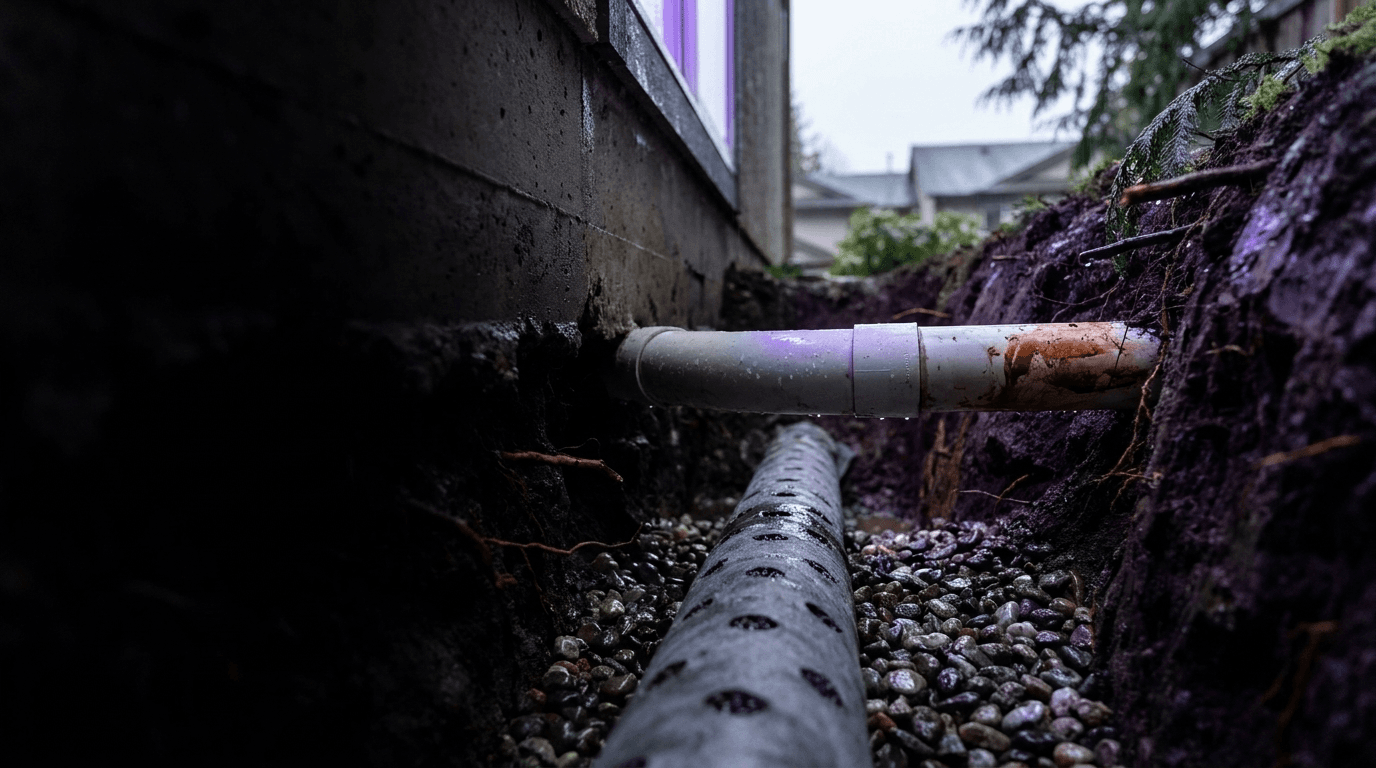
Metro Vancouver calls rain and groundwater in the wrong pipe inflow and infiltration: extra groundwater and rainwater flowing into sanitary sewers, which are not built to carry it. Some of it gets in through cracks and leaky joints, which is age. Two of the ways are a decision somebody made: a downspout and a foundation drain plumbed into the sanitary line. The region's instruction to property owners is one sentence long — make sure downspouts and foundation drains are not connected to your sanitary sewer pipe — and the City of Coquitlam puts the same thing as two things to go and check, your gutters and outside drains, then your basement and foundation drains.
What it looks like from inside the house
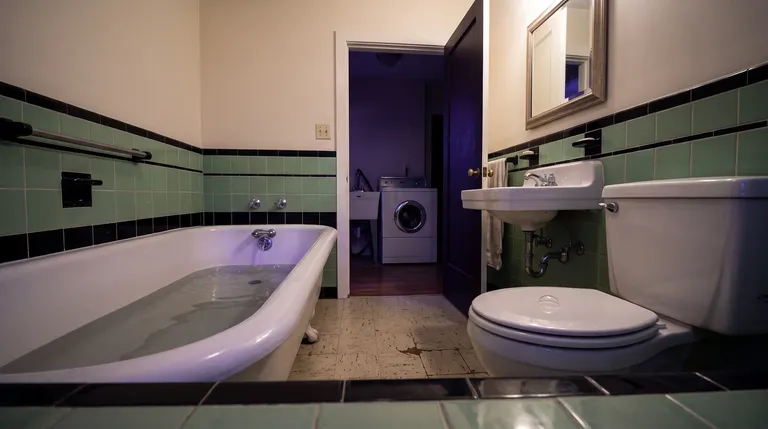
A sanitary line that is also carrying your roof has no spare room in a storm, and a drain under pressure shows itself at the lowest opening in the house. A basement shower, a laundry tub or a floor drain that gurgles or rises while the rain is heaviest, then behaves perfectly by Monday, is describing the pipe rather than the fixture. A drain that only misbehaves in heavy rain is the one worth a camera.
Damaged pipes and improperly connected roof and foundation drains on private property can let in rainwater and groundwater that doesn't belong in our sanitary sewers.
The region started charging for wet weather in 2024
Since 2024 Metro Vancouver has priced wet weather flow — the extra water that turns up in the sewers when it rains — and it is phasing that pricing in over ten years. The bill goes to member municipalities, not to your door, so nothing in it is a charge you will see. What it changes is how much your city cares where the rain in its sanitary system came from, because, as the region puts it, a lot of it comes from pipes on private properties: pipes that are cracked, have leaky joints, or are improperly connected to a property's sanitary sewer line. Expect more interest in that question over the next decade, not less.
How anyone actually finds out
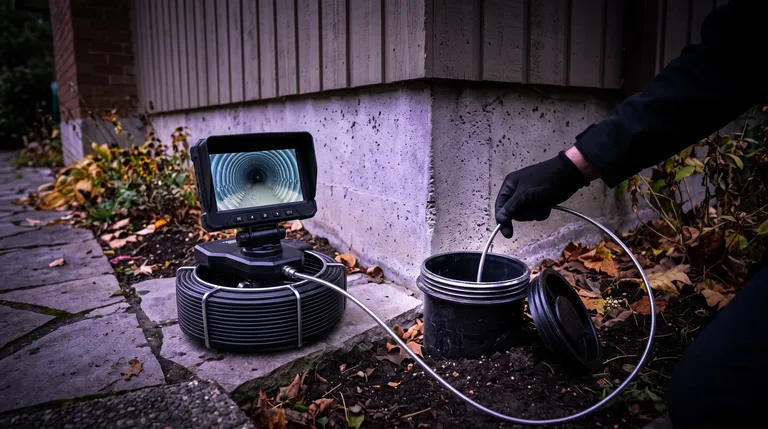
You cannot read this off the surface. A downspout elbow disappearing into the ground beside the wall looks the same whether it joins a storm line, a perimeter drain or a sanitary lateral. Metro Vancouver's own advice to property owners is to have the pipes inspected with a camera by a plumber or drainage specialist at least once a decade, which is also the only way to answer the question. Panther's drain camera inspection page lists what the camera reads on the way through — root intrusion, bellies and sags, cracks and fractures, offset joints, collapse, grease and scale, foreign objects — and the part that matters here is the locating: the camera carries a sonde, a transmitter the equipment tracks from above ground, so the route of the pipe gets marked on the grass before anyone opens it. Which line your roof water joins, and where it joins, is the same question answered with the same tool.
Before the rain arrives
- Walk the perimeter and find where every downspout enters the ground.
- Note which drains gurgle or rise only in heavy rain.
- Clear the leaves off the yard drains and catch basins.
- Send roof water away from the footings, never against them.
- Look in the crawlspace after the first heavy day.
- Book a camera inspection if the pipes have never had one.
- Keep the report. Insurers and strata councils ask for it.
Fifty to eighty millimetres over a weekend is an ordinary Metro Vancouver November, which is the point. An ordinary November is the test your drainage either passes or does not, and it is a cheap test to watch, because the house does the work and tells you for free. It tells you while the rain is falling and goes quiet an hour after it stops. November is the season when it is still talking.